
Potable Tank Hygiene Guide for UK Sites
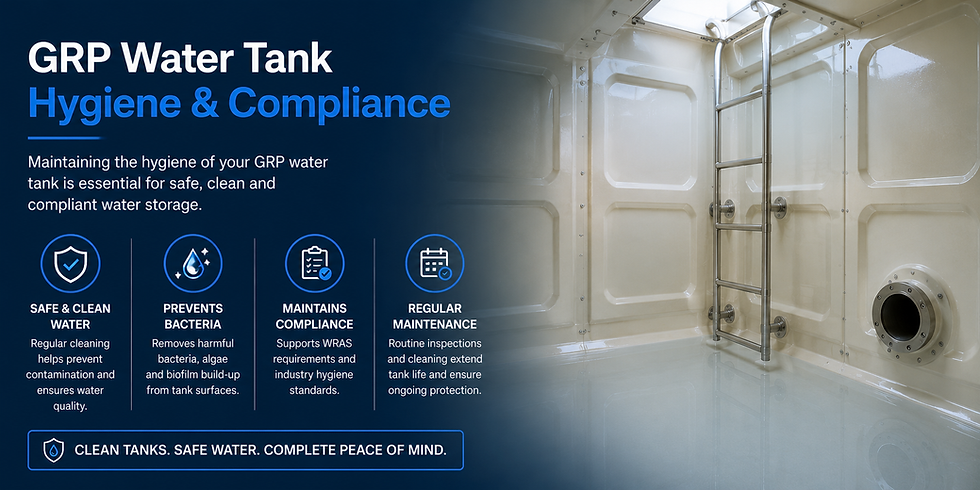
A tank does not need to fail completely to become a hygiene risk. In commercial buildings and industrial settings, potable water quality can be compromised long before there is an obvious leak, outage or complaint. That is why a proper potable tank hygiene guide matters - not as a paper exercise, but as a practical way to protect water quality, maintain compliance and avoid preventable remedial costs.
For facilities managers and building operators, the challenge is rarely just cleaning. The real issue is understanding what tank condition, access, lid design, internal surfaces and pipework arrangement are doing to stored water over time. Good hygiene starts with the tank itself. If the structure, coating, lining or cover is no longer performing as it should, repeat cleaning alone will not solve the underlying problem.
What a potable tank hygiene guide should actually cover
A useful potable tank hygiene guide goes beyond instructions for washdown and chlorination. It should address the full storage environment, including contamination routes, material condition, inspection frequency, access safety and the practical limits of maintenance.
In potable water systems, hygiene risk often develops gradually. Damaged internal coatings can trap debris and support bacterial growth. Poorly fitting lids allow dust, insects and surface water ingress. Unscreened vents, missing overflows and deteriorated seals create avoidable exposure points. In older steel or concrete tanks, corrosion and surface degradation can make effective cleaning harder and can shorten the interval between hygiene interventions.
This is where site teams benefit from taking an engineering-led view. Water quality is not only about what enters the tank from the mains. It is also shaped by what the tank contributes through age, wear, design defects and neglected remedial works.
The main hygiene risks in potable water storage
Most contamination events in stored potable water come from a small number of recurring defects. One is inadequate exclusion of contaminants. If access hatches do not seal correctly, if lids are cracked or if insulation and covers have deteriorated, the tank becomes vulnerable to ingress from the surrounding plantroom or roof environment.
Another common issue is internal condition. Corroded steel, delaminating coatings, failing joints and rough concrete surfaces all create areas where sediment can collect. Once this starts, the tank may still appear serviceable from the outside while hygiene standards inside steadily decline.
Stagnation is another factor. Oversized tanks, poorly balanced systems or low-turnover sections can leave water sitting for too long. In these cases, even a structurally sound tank may present a hygiene concern because storage design no longer matches building demand. The remedy may involve cleaning, but it can also mean reviewing capacity, circulation or sectional operation.
Temperature control also matters. Potable cold water storage should remain cold enough to reduce microbiological risk. Where lids are uninsulated, where tanks sit in hot plant spaces, or where covers have been removed and not properly reinstated, hygiene management becomes more difficult.
Inspection first, cleaning second
A common mistake is to schedule cleaning without first understanding the tank's physical condition. Cleaning and disinfection are essential maintenance measures, but they should follow a competent inspection rather than replace one.
A detailed survey should assess internal surfaces, roof condition, access points, support structures, vents, overflows, warning pipes, screens, insulation and evidence of ingress or stagnation. It should also consider whether the existing coating or lining remains suitable for potable water contact and whether previous repairs have created weak points.
This matters because a tank with recurring hygiene failures may not have a cleaning problem at all. It may have a refurbishment problem. If the internal finish is breaking down, if corrosion has advanced beneath coating systems, or if the lid arrangement is fundamentally poor, repeated cleaning can become a costly holding measure rather than a long-term solution.
Cleaning and disinfection - where they fit
Routine cleaning removes accumulated sediment, biofilm and debris. Disinfection reduces microbial risk before the tank is returned to service. Both are necessary parts of potable water hygiene management, but neither should be treated as a cure-all.
The required frequency depends on site conditions, water usage, tank type and risk profile. A well-designed GRP or lined tank in a controlled environment may need less intervention than an ageing steel or concrete tank with known ingress points. High-dependency buildings, regulated environments and sites with critical occupancy often justify more frequent inspection and tighter hygiene controls.
It also depends on what is found during inspection. If there is evidence of significant corrosion, failed seals or damaged internal surfaces, cleaning may need to be paired with remedial work before the tank can be considered properly protected.
When hygiene issues point to refurbishment
There is a point where cleaning costs start masking a more structural issue. If a tank repeatedly fails visual hygiene standards, if coatings are no longer sound, or if the lid and access arrangement cannot reliably prevent contamination, refurbishment is often the more sensible route.
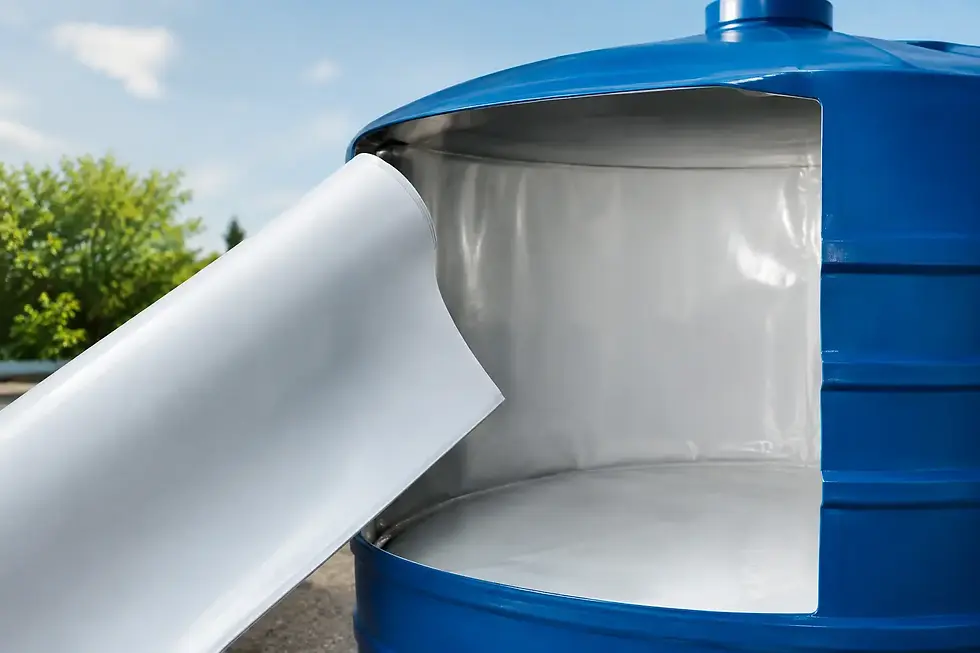
For steel tanks, this may mean preparing and recoating internal surfaces with a suitable potable-grade system or installing a compliant internal lining where the base structure remains serviceable. For concrete tanks, a flexible lining system can create a clean internal barrier while avoiding the disruption and cost of full replacement. Lid upgrades, insulated covers, screened vents and compliant access improvements are often just as important as internal remedial works.
The trade-off is straightforward. Refurbishment requires planned intervention, but it can restore hygiene performance and extend asset life at a lower cost than replacing a viable tank. Full replacement becomes the better option when structural deterioration, access constraints or configuration issues make refurbishment impractical or poor value.
Potable tank hygiene guide for different tank materials
Steel tanks
Steel tanks can deliver long service life, but hygiene standards depend heavily on corrosion control. Once internal coatings fail, surface rusting and pitting can accelerate. Sediment traps form more easily, cleaning becomes less effective and water quality risk rises. In many cases, a properly specified refurbishment programme can recover the tank and improve hygiene resilience.
Concrete tanks
Concrete structures present a different challenge. Surface degradation, cracking and porous areas can make hygiene management more difficult, especially in older underground or plantroom installations. Here, lining systems are often the most practical route because they create a new potable-compliant internal surface without major structural replacement.
GRP tanks
GRP tanks are generally lower maintenance from a hygiene perspective, but they are not immune to defects. Aged seals, damaged panels, poor lid fitment and degraded insulation can still compromise water quality. Where GRP assets are otherwise sound, targeted remedial works may be enough to restore compliance.
Compliance is not just paperwork
Potable water storage compliance is often treated as a documentation issue until a defect is found. In reality, compliance is physical. It depends on whether the tank excludes contaminants, supports safe inspection, maintains a suitable internal condition and can be cleaned effectively.
For commercial and industrial operators, the strongest approach is to combine record keeping with periodic condition surveys and evidence-based remedial planning. That gives site teams a clearer basis for deciding whether a tank needs routine hygiene works, upgrade measures or a more substantial refurbishment strategy.
It also supports budget control. Reactive responses usually cost more, especially when contamination concerns create urgency, access restrictions or interruption to occupied buildings.
Practical signs your tank hygiene strategy needs attention
If cleaning intervals are becoming shorter, if debris reappears quickly, or if there are recurring concerns around odour, discolouration or ingress, the storage asset should be reviewed in more depth. The same applies where lids are warped, insulation is damaged, access covers are insecure or internal surfaces show visible breakdown.
A tank can remain in operation while moving steadily away from best practice. That is why visual condition, not just continuity of service, should guide decision-making. A functioning tank is not always a hygienic one.
For many sites, the most effective route is a staged approach: inspect thoroughly, address immediate hygiene risks, then decide whether targeted refurbishment or full replacement offers the stronger whole-life value. That is the model specialist contractors such as Nationwide Water Solutions Ltd typically apply, particularly where potable compliance, difficult access and minimal disruption all need to be balanced.
Good potable tank hygiene is not achieved by cleaning alone. It comes from keeping the entire storage environment fit for purpose, so the water entering the tank is not compromised by the tank meant to protect it. If your current regime only reacts when a problem becomes visible, the next sensible step is not another clean - it is a closer look at the asset itself.


Comments