
When Epoxy Water Tank Coating Is Right
Updated: May 6

A tank does not usually fail all at once. More often, the warning signs show up first as coating breakdown, local corrosion, staining, rough internal surfaces, or recurring hygiene concerns after inspection. In many of these cases, epoxy water tank coating is a practical refurbishment method that can return a serviceable asset to reliable use without the cost and disruption of full replacement.
For facilities managers, contractors, and building operators, the key question is not whether epoxy is a recognised tank lining material. It is. The real question is whether it is the right solution for the specific tank, service duty, and compliance requirement in front of you.
What epoxy water tank coating actually does
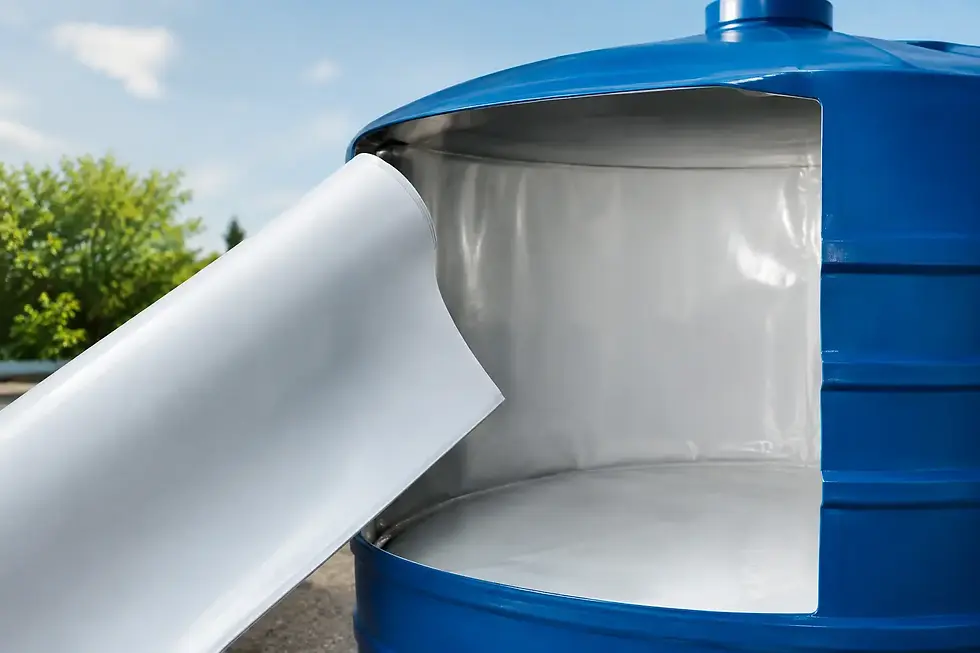
An epoxy coating system creates a bonded barrier across the prepared internal surface of a tank. In potable, process, and certain fire protection applications, that barrier is used to isolate the substrate from stored water, reduce further corrosion, improve cleanability, and extend the operational life of the structure.
On steel tanks, epoxy is commonly used to arrest the progression of internal corrosion where the base structure remains fundamentally sound. On concrete tanks, it can help seal surfaces, reduce dusting or local surface degradation, and provide a more hygienic finish where porosity and surface condition have become a concern. The coating itself is only one part of the solution, however. Performance depends heavily on the condition of the substrate, the preparation standard achieved, the application environment, and the suitability of the resin system for the intended use.
That is where many refurbishment decisions are won or lost. A good specification applied to the wrong tank will still disappoint. A suitable epoxy system applied after poor preparation will do the same.
Where epoxy water tank coating works well
Epoxy water tank coating tends to be most effective where the tank shell is structurally serviceable and the defects are primarily surface-related rather than fundamental failures of the asset. Typical examples include ageing sectional steel tanks with internal coating breakdown, concrete tanks with worn internal faces, and tanks that need hygiene improvements after years of service.
For commercial buildings, hospitals, industrial sites, schools, and plant rooms, refurbishment can make financial sense when replacement would involve difficult access, crane operations, major strip-out, or prolonged system downtime. In those situations, coating a viable tank can preserve the existing asset while improving performance and compliance.
There are also operational benefits. Refurbishment is often faster than full replacement, usually less disruptive to the surrounding building fabric, and may allow associated remedial work to be completed at the same time. That could include cover upgrades, access hatch improvements, insulation renewal, screened vent replacement, or internal structural repairs identified during survey.
When epoxy is not the best answer
Not every tank is a coating project. If corrosion has significantly reduced section thickness, if joints and panels are failing, or if the asset is fundamentally obsolete for its duty, coating may only delay a larger problem. Equally, if a tank has persistent leakage through structural defects or severe movement, a resin system on its own is unlikely to resolve the underlying issue.
This is especially relevant in older steel tanks where corrosion behind supports, around fixings, or at panel seams may not be fully visible until intrusive inspection begins. It also matters in concrete structures where substrate contamination, cracking, or moisture transmission can undermine adhesion.
In some cases, a flexible internal lining system is the better route, particularly where movement, complex geometry, or difficult substrate conditions make a rigid coating less forgiving. In others, full tank replacement is the correct technical and commercial decision. The right answer depends on the tank material, age, condition, access constraints, water quality requirements, and expected service life after refurbishment.
Surface preparation is where performance starts
The success of an epoxy system is decided long before the final coat is applied. Surface preparation is not an add-on. It is the foundation of the whole refurbishment.
For steel tanks, that typically means removing failed coatings, corrosion products, contamination, and any weakly adhered material to achieve the specified preparation standard and surface profile. For concrete, preparation may involve mechanical cleaning, laitance removal, local repairs, making good voids, and ensuring that the substrate is suitable to receive the system.
The practical challenge is that tank interiors are confined spaces. Ventilation, humidity, temperature, access, and drying times all affect application quality. If environmental conditions are not controlled, even a technically correct product can cure poorly or bond inconsistently. That is why experienced application teams, proper inspection stages, and clear quality control matter as much as the material itself.
Potable water compliance and hygiene considerations
Where the tank stores wholesome water, the coating system must be appropriate for potable use. That means more than a generic claim of water resistance. Materials should be selected with the intended service in mind, supported by relevant compliance credentials, and installed in a way that preserves hygiene standards throughout the works.
This has direct implications for tank isolation, cleaning, disinfection, and recommissioning. It also affects decisions around detailing. Areas around flanges, supports, corners, roof interfaces, and access openings often become weak points if they are not addressed properly during refurbishment. A tank can look acceptable on handover yet develop premature coating defects if these details are rushed.
For regulated environments, the contractor's understanding of inspection requirements, water hygiene controls, and refurbishment sequencing is just as important as the resin chemistry. Buyers are not simply purchasing a coating. They are purchasing a compliant return to service.
Epoxy on steel tanks versus concrete tanks
Steel and concrete behave differently, so the coating strategy should too. Steel tanks usually present a corrosion management problem. The goal is to create a durable barrier over a well-prepared metal surface and prevent further attack. Detailing around bolts, seams, cleats, and structural members is often critical because these locations see higher stress and are more vulnerable to moisture retention.
Concrete tanks are different. The substrate is porous, may hold residual moisture, and can vary widely in surface quality from one site to another. There may be repairs, blowholes, honeycombing, or contamination from previous service conditions. In these cases, compatibility between repair materials, primers, and topcoat system becomes important. The coating has to do more than sit on the surface. It has to work with the condition of the concrete that is actually there.
That distinction matters commercially as well. A straightforward steel tank with coating failure may be a predictable refurbishment project. A concrete tank can reveal more variables once preparation starts, which should be reflected in survey scope and project planning.
Cost savings are real, but only when the scope is honest
Epoxy refurbishment is often presented as a cheaper alternative to replacement, and in many cases it is. The savings can be substantial when the existing asset is structurally viable and access for replacement would be complex. Avoiding major building alterations, lifting operations, and long lead times can materially reduce total project cost.
That said, low initial price should never be the main selection criterion. If preparation is under-scoped, if local steel repairs are omitted, or if the wrong system is used for the duty, the apparent saving disappears quickly. Early coating failure leads to repeat shutdowns, further remedial work, and more operational risk than a correctly specified project would have created in the first place.
A dependable survey should therefore identify not only visible defects, but also the likely extent of preparatory works, repairs, access requirements, and any ancillary upgrades needed to deliver a meaningful service life extension.
Choosing a contractor for epoxy water tank coating
The safest procurement route is to look for a specialist that understands the tank as a whole asset, not just the coating package. That means practical experience with tank structures, confined-space working, potable water environments, compliance-led surveys, and refurbishment versus replacement decision-making.
A contractor with in-house technical capability can usually offer a more accurate recommendation because they are not forced into a single remedial route. Sometimes epoxy is correct. Sometimes a proprietary lining system or a replacement tank is the stronger answer. What matters is that the recommendation follows the condition of the asset and the operational needs of the site.
This is the standard approach taken by specialists such as Nationwide Water Solutions Ltd, where surveys, refurbishment methods, lining options, and replacement capability all sit within the same engineering-led service model.
The right question to ask first
Before asking what an epoxy specification costs, ask whether the tank is genuinely a good coating candidate. That one decision shapes lifespan, compliance, shutdown planning, and long-term value more than any product data sheet ever will.
A well-executed coating project can add years of reliable service to a viable tank. A poorly chosen one simply coats over a larger problem. If the survey is thorough and the remedial route is honest, epoxy can be a highly effective part of a water tank refurbishment strategy.


Comments