
How Often to Inspect Water Tanks in the UK

If you are responsible for a commercial or industrial water system, leaving tank inspections to chance is where small defects turn into expensive failures. When clients ask how often inspect water tanks, the honest answer is not simply annual or five-yearly - it depends on tank duty, stored water type, condition, access, material, and compliance risk.
For facilities teams, building services engineers, and site managers, inspection frequency should be based on risk rather than habit. A potable cold water tank serving an occupied building has very different inspection demands from a sprinkler tank, an acid storage tank, or an underground process tank. The right interval protects water quality, asset life, and compliance. The wrong one can leave corrosion, coating breakdown, liner failure, contamination, or structural defects unnoticed for far too long.
How often should water tanks be inspected?
For most commercial potable water storage tanks, an internal inspection at least annually is a sensible benchmark, especially where the tank supplies occupied buildings or critical services. In many cases, a formal clean and disinfection programme will sit alongside that inspection schedule. However, annual access is not always enough on higher-risk systems, and it may be more than is needed for lower-risk tanks in stable condition with strong monitoring controls.
A more useful way to approach inspection intervals is to split them into routine visual checks, planned formal inspections, and condition-triggered surveys. Routine external checks may happen monthly or quarterly as part of site maintenance. These pick up obvious issues such as damaged lids, insecure access hatches, overflowing warning pipes, insulation defects, leaks, or signs of movement around bases and supports.
Formal inspections should be carried out at intervals that reflect the tank’s function and risk profile. Potable water tanks generally justify the most regular review because any defect can affect hygiene and regulatory compliance. Process tanks may need closer attention where stored liquids are aggressive, temperatures fluctuate, or downtime is costly. Sprinkler tanks often require a structured maintenance regime aligned with fire protection obligations, not just a general water hygiene approach.
What affects how often inspect water tanks?
The biggest factor is what the tank stores. Potable water tanks demand close attention because contamination risks are unacceptable in occupied commercial settings such as offices, hospitals, schools, hotels, and industrial facilities with welfare provision. By contrast, a non-potable process tank may not create the same public health risk, but it may still need frequent inspection because chemicals, sediment, or temperature can attack internal surfaces and fittings.
Tank construction also matters. Steel tanks can be vulnerable to corrosion, coating failure, and seam deterioration if protective systems are damaged or ageing. Concrete tanks may develop cracking, water ingress, surface degradation, or hygiene issues if internal finishes break down. GRP tanks can suffer from impact damage, distortion, joint issues, and cover defects. Underground tanks are harder to assess informally, so planned surveys become even more important.
Age and repair history should shape inspection intervals as well. A relatively new tank with a sound internal lining, secure lid arrangement, and good access control may sit on a more stable programme than an older asset with previous leaks, corrosion, or ad hoc repairs. Once a tank has a known history of defects, longer intervals usually stop making sense.
Site conditions can shorten the time between inspections. Poor ventilation, difficult access, aggressive atmospheres, frost exposure, vibration, or nearby plant activity can all accelerate deterioration. Tanks in coastal or corrosive industrial environments often need a more cautious strategy than those in protected internal plant areas.
Inspection frequency by tank type
For potable cold water storage, annual internal inspection is a prudent standard for many commercial buildings, supported by more regular external checks. If water quality concerns, previous non-conformances, or visible condition issues exist, the interval should be reduced.
For sprinkler tanks, inspection regimes must reflect both structural condition and the operational requirements of the fire protection system. Because these assets are life safety critical, any uncertainty over tank integrity, levels, access covers, valves, or internal condition should trigger early specialist review rather than waiting for a planned date.
For process tanks, there is no single interval that suits every installation. A lightly used service water tank may be manageable on a relatively standard schedule, while a tank exposed to aggressive chemicals or abrasive contents may need much more frequent inspection and lining assessment.
For acid storage and specialist chemical tanks, inspection should be set according to chemical compatibility, duty cycle, temperature, and the condition of the containment system. In these environments, lining performance is not a cosmetic issue - it is a containment and safety issue.
For underground tanks, the challenge is that defects can remain hidden until they become serious. Where access is restricted and visual awareness is limited, surveys need to be planned with greater discipline. If there is any doubt around ingress, structural soundness, or coating failure, waiting for the next scheduled look can be an expensive mistake.
Signs a tank needs inspection sooner
A calendar-based programme is only part of the picture. Tanks often tell you when the interval needs tightening.
If there is discolouration in water, sediment build-up, unusual odour, recurring microbiological issues, or user complaints, inspection should be brought forward. The same applies where there are signs of leakage, rust staining, blistered coatings, failed joints, damaged insulation, insecure lids, vermin risk, or evidence that overflows and vents are not properly screened.
Operational changes also matter. A building use change, occupancy increase, low turnover, seasonal shutdown, or altered process demand can affect water quality and internal tank condition. A tank that was low risk under one duty pattern can become much higher risk under another.
Works nearby can justify an earlier survey too. Roof works, plant replacement, structural alterations, and access modifications can all introduce contamination pathways or accidental damage. After any event that could affect tank integrity, a precautionary inspection is usually the right decision.
What a proper inspection should cover
A meaningful tank inspection goes beyond lifting a lid and taking a quick look. It should assess the structure, internal surfaces, hygienic condition, access arrangements, insulation, screens, warning arrangements, pipework interfaces, valves, supports, and evidence of corrosion or deterioration.
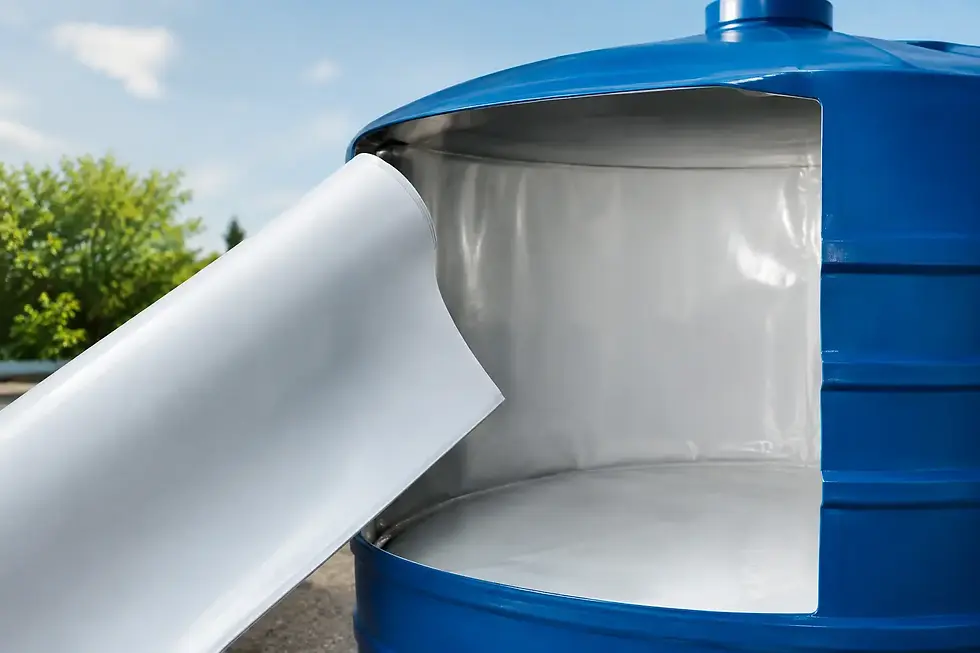
For lined or coated tanks, the condition of the protective system is critical. Localised failure can quickly spread, particularly in steel or concrete structures where the substrate is then exposed to water, oxygen, chemicals, or contamination. Catching that early may allow targeted remedial work rather than a much larger refurbishment or replacement later.
The inspection should also consider whether the tank remains fit for current standards and operating conditions. It is common to find older assets that are structurally serviceable but non-compliant in practical ways - poor lid arrangements, inadequate screening, damaged internal surfaces, difficult access for cleaning, or outdated component details. Those tanks often benefit from refurbishment, relining, or cover upgrades rather than full replacement.
Why inspection frequency should link to refurbishment planning
Inspection is not just about finding faults. It is how you decide whether a tank needs cleaning, repair, lining, coating renewal, sectional replacement, or full replacement. If the survey process is weak, maintenance budgets end up reactive and inefficient.
This is particularly relevant where tanks are costly to replace outright because of size, access restrictions, or operational dependency. In many commercial and industrial settings, a well-timed refurbishment can extend asset life significantly and avoid the disruption of total replacement. That only works if deterioration is identified before the tank crosses from repairable to uneconomical.
Engineering-led surveys are useful here because they connect condition findings to a practical remedial route. A steel tank with local corrosion may be recoverable with internal preparation and a suitable coating system. A concrete tank with surface degradation may be restorable with an appropriate lining system. A defective cover arrangement may be solved with insulated replacement lids rather than major structural works. The inspection schedule should support those decisions, not lag behind them.
A risk-based approach is the right one
So, how often inspect water tanks? For many UK commercial potable water systems, annual formal inspection is a sound baseline, with routine external checks in between. But that is only a starting point. High-risk, ageing, heavily used, chemically exposed, or difficult-access tanks often need more frequent attention. Stable, well-maintained assets with good history and low-risk duty may justify a more tailored interval, provided that decision is supported by competent assessment.
For organisations with multiple tanks across mixed estates, consistency matters. A clear inspection regime, backed by documented findings and a realistic remedial plan, is far more effective than relying on memory or waiting for an issue to become visible. That is where specialist survey support can add real value. Companies such as Nationwide Water Solutions Ltd approach tank inspections as part of the wider lifecycle of compliance, refurbishment, and long-term asset performance.
The most cost-effective inspection programme is rarely the one with the fewest visits. It is the one that finds deterioration early enough to keep the tank safe, compliant, and in service for longer.


Comments