
Rainwater Harvesting Tank Maintenance for Commercial Sites
Updated: Jul 27

A rainwater tank can look sound from the outside while sediment, failed screens, biofilm and poorly maintained overflows steadily reduce the performance of the whole system. Effective rainwater harvesting tank maintenance is therefore not simply a cleaning task. For commercial sites, it is a planned programme that protects stored water quality, pumping equipment, building services and the useful life of the storage asset.
Rainwater harvesting systems are commonly used for toilet flushing, irrigation, washdown and process applications. Their value depends on reliable collection, safe storage and controlled distribution. When one part of the system is neglected, the result can be blocked filters, pump failures, unpleasant odours, reduced yield or water entering areas where it should not be. A maintenance regime should reflect the tank material, its location, the use of the harvested water and the consequences of service interruption.
Why rainwater harvesting tank maintenance needs a system view
The tank is only one element of the installation. Roof surfaces, gutters, downpipes, leaf guards, first-flush arrangements, filters, pumps, control panels, mains back-up systems and distribution pipework all affect the condition of the stored water. Treating the tank in isolation can leave the cause of recurring contamination or sediment unresolved.
Organic matter from roofs is a frequent source of problems. Leaves, moss, bird droppings and airborne debris enter the drainage system, particularly where gutter maintenance is inconsistent or trees overhang the collection area. Fine particles then settle in the base of the tank. Over time, this layer can harbour microbial growth, obstruct outlets and reduce the effective storage volume.
The required standard depends on the end use. Water intended for non-potable applications still needs to be controlled carefully, especially where aerosols may be generated or where users could mistake harvested water for drinking water. Where mains water top-up is installed, suitable backflow protection and clear separation between potable and non-potable systems are essential. Facilities managers should review the complete installation whenever its use, occupancy or building services arrangement changes.
Inspect the catchment before the tank
A tank clean is less effective if debris is allowed to return immediately. Inspection should begin at roof level and follow the water route to the tank. Gutters and downpipes should be clear, securely fixed and free-draining. Damaged mesh, blocked leaf guards and deteriorated seals should be corrected before they contribute to a larger maintenance issue.
Screens, filters and first-flush devices
Pre-tank filtration requires regular attention because it protects the most difficult parts of the system to access. A blocked filter can restrict collection during heavy rainfall, while a damaged or poorly seated screen can allow leaves and larger debris into the tank. First-flush devices should discharge as designed, removing the initial, dirtier run-off from the roof after a dry period.
The inspection interval will vary with site conditions. A warehouse in an exposed industrial estate may experience mainly airborne dust, while a school or office building surrounded by mature trees may need more frequent checks during autumn. Heavy rainfall can also reveal faults that are not obvious during dry weather, such as overflowing gutters, inadequate downpipe capacity or an obstruction at the inlet.
Inlets, overflows and vermin protection
Tank inlets should spread incoming water without disturbing settled material at the base. If incoming flow scours sediment into suspension, it increases the load on filters, pumps and downstream equipment. The inlet arrangement, access cover and any internal components should be checked for cracking, corrosion, loose fixings and ageing seals.
Overflows deserve equal attention. They must pass excess water safely away from the building and remain protected against rodents, insects and debris. A damaged mesh screen may appear minor, but it can introduce contamination and create a route for vermin to enter the stored water. Where the overflow discharges close to foundations, walkways or drainage infrastructure, its condition should also be assessed as part of wider site water management.
Establish a practical inspection and cleaning schedule
A maintenance schedule should be based on risk, not an arbitrary annual date. Tanks receiving water from large roofs, tree-lined sites or areas with high dust loading may require more frequent inspection. Systems supplying critical building services need a higher level of assurance than a small irrigation-only installation.
A routine visual check can identify changes in water appearance, unusual odours, damaged lids, alarm conditions, leaks and signs of pump cycling. It should also confirm that access covers are secure and that labelling remains visible. For underground tanks, surrounding ground conditions, chamber covers and evidence of surface water ingress need particular scrutiny.
Periodic internal inspection provides a clearer view of the asset condition. It can establish the depth of sediment, the state of internal surfaces, the integrity of liners or coatings, the condition of outlet fittings and whether biological growth is present. The tank should be isolated and drained only through a controlled procedure that protects the building's operational water requirements and prevents uncontrolled discharge.
Cleaning frequency depends on the inspection findings. Where sediment is limited and filtration is functioning correctly, cleaning may be straightforward. Where there is significant sludge, persistent organic contamination or a coating failure, cleaning alone may not provide a lasting answer. The underlying ingress route and the condition of the tank structure must be addressed at the same time.
Protect pumps, controls and distribution equipment
Many rainwater harvesting failures are first noticed at the pump set rather than inside the tank. Reduced pressure, frequent alarms, irregular flow and repeated pump starts can indicate blocked strainers, low water levels, air ingress, worn components or a control fault. A structured maintenance visit should therefore include the pump, non-return valves, pressure vessel, level sensors, solenoid valves and control panel.
Level controls are particularly significant where the system switches between harvested rainwater and mains top-up. Incorrect calibration can cause a tank to overfill, a pump to run dry or unnecessary use of mains water. Verify high- and low-level alarms, automatic changeover functions and any remote monitoring after cleaning, repairs or alterations to the installation.
Distribution pipework also needs clear identification. Rainwater systems should remain visibly distinct from potable services, with appropriate labels at tanks, plant rooms, outlets and valves. This protects maintenance teams and contractors who may work on the building years after the original system was installed.
Know when refurbishment is more appropriate than replacement
Concrete, steel, GRP and plastic tanks each fail in different ways. Steel tanks may develop corrosion around joints, roof details or penetrations. Concrete structures can crack, allow groundwater ingress or suffer surface deterioration. Older GRP tanks can show wear at joints and fittings, while plastic tanks can be affected by ultraviolet exposure, deformation or damaged connections.
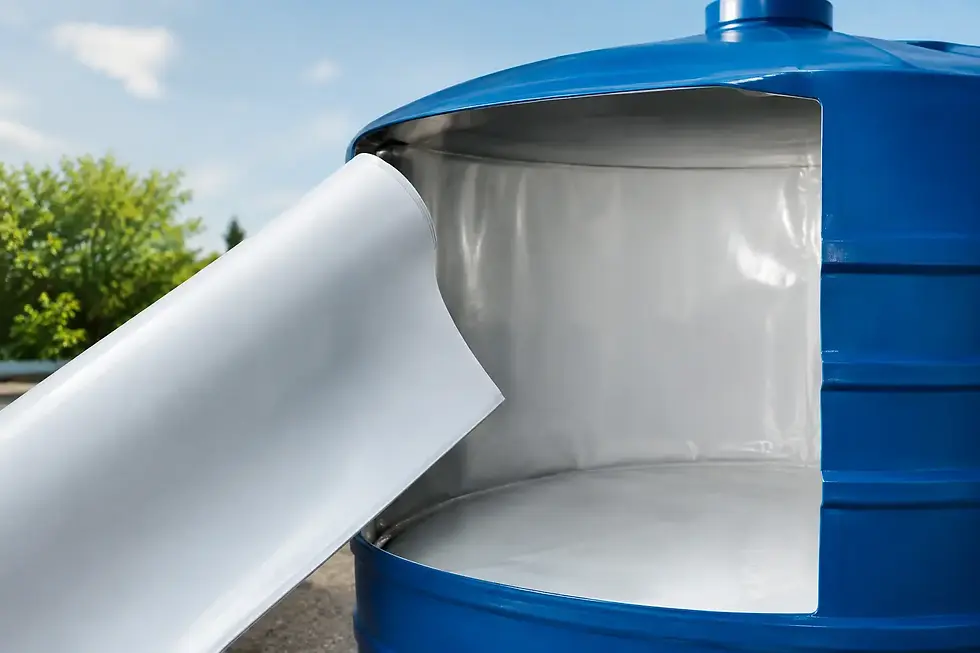
If the tank remains structurally serviceable, refurbishment can often offer a more practical route than full replacement. A properly specified lining or coating system can restore containment, protect internal surfaces and extend service life without the access, lifting and downtime associated with removing a large vessel. The correct option depends on the substrate, water chemistry, extent of damage and intended use of the harvested water.
For sites with difficult access, in-house manufactured flexible lining systems can be installed within existing tanks to form a new, contained internal barrier. This approach is particularly valuable where replacement would require roof removal, structural alteration or major disruption to occupied premises. Epoxy coating systems may suit other applications, provided surface preparation and curing conditions are controlled correctly.
Nationwide Water Solutions Ltd assesses tank condition as part of a compliance-led survey, helping asset owners distinguish between defects that can be remedied and tanks that genuinely require replacement. That distinction can materially reduce capital cost while improving the reliability of the wider rainwater harvesting installation.
Manage safety and compliance during maintenance
Tank maintenance introduces hazards that should not be treated as routine. Internal entry can involve confined-space risks, restricted access, residual water, slippery surfaces and limited rescue options. Work should be planned by competent personnel with an appropriate risk assessment, isolation procedure, access controls and rescue arrangements. Unauthorised entry must be prevented throughout the work.
Where rainwater is used in occupied buildings, hygiene management should include documented inspections, cleaning records, corrective actions and confirmation that non-potable water cannot cross-connect with drinking water systems. This record is useful for facilities teams, auditors, insurers and future contractors. It also makes it easier to identify recurring issues, such as a particular roof area producing excessive sediment after storms.
A well-maintained rainwater tank should not demand constant intervention. It should provide predictable storage, clean operation and clear evidence that its condition is being managed. The most cost-effective programmes prevent debris, structural decline and control faults from becoming urgent failures - keeping a useful water asset available when the site needs it.


Comments