
Tank Roof Leak Solutions for Commercial Sites
Updated: Jul 27

A leaking tank roof is rarely just a roofing defect. For potable, process and sprinkler water storage, it can admit contaminated rainwater, accelerate corrosion, compromise insulation and create an unplanned compliance issue. Effective tank roof leak solutions therefore begin with identifying the route of water ingress and the condition of the tank as a whole, rather than applying a temporary sealant to the visible drip.
For facilities teams, the priority is clear: protect the stored water, keep the asset operational where possible and avoid spending capital on replacement when a technically sound refurbishment will extend service life. The correct approach depends on the tank construction, roof design, stored liquid, access constraints and extent of deterioration.
Why tank roofs begin to leak
Tank roof leaks often develop gradually. Corrosion beneath failed coatings, degradation around roof joints, damaged bolts, perished gaskets and movement at panel connections can all allow water through. On sectional steel tanks, leaks may occur at roof panel overlaps or at the junction between the roof and tank shell. GRP roofs can crack around fixings or high-stress areas, while concrete roofs may allow water through failed joints, cracking or deteriorated waterproofing.
Condensation can also be mistaken for a leak. Poorly insulated lids and covers may create significant internal condensation, particularly where water temperatures differ from ambient conditions. This must be distinguished from external rainwater ingress because the remedial work is different. A survey should establish whether the source is weather penetration, condensation, an internal overflow issue or leakage from associated pipework.
The consequences are not limited to wet surfaces. Rainwater entering a potable water tank can introduce debris, insects, bird fouling and microbiological contaminants. In sprinkler tanks, roof deterioration may affect the reliability and integrity of a critical fire protection asset. On industrial sites, a compromised roof can expose stored process liquids to dilution or contamination, affecting downstream operations.
Tank roof leak solutions start with a condition survey
A proper survey provides the evidence needed to select the correct repair route. The inspection should assess the roof structure, panel joints, fixings, seals, internal and external coatings, access hatches, vents, overflows, insulation and supporting steelwork. It should also consider whether corrosion is localised or whether loss of section has affected structural performance.
This is particularly important where a leak has been present for some time. Water can travel along roof panels, insulation or structural members before becoming visible inside the tank. Treating the point where the drip appears may not address the point of entry.
For potable water systems, the survey should also consider hygiene and compliance risks. Damaged screened vents, ill-fitting access covers and ineffective seals are frequent routes for contamination. A roof repair may need to form part of a wider upgrade to restore a secure, weatherproof and hygienic tank environment.
Selecting the right repair method
The best solution is not always the fastest-looking one. A small, isolated defect in an otherwise sound roof may be repaired locally. Widespread corrosion, repeated leaks or failed previous repairs may justify coating, relining, roof replacement or a complete tank refurbishment programme.
Localised joint and fixing repairs
Where roof panels remain structurally sound, targeted repairs can be effective. This may involve replacing failed gaskets and corroded fasteners, repairing panel laps, resealing access hatches or renewing seals around pipe penetrations. The preparation work matters as much as the seal itself. Corroded surfaces must be cleaned and stabilised, with compatible materials selected for the tank substrate and service conditions.
Local repairs are cost-effective where the defect is genuinely confined. They are less suitable when corrosion is present across multiple joints or when recurring leaks indicate that the existing roof system has reached the end of its practical service life.
Roof coating systems
Specialist epoxy resin coating systems can provide a durable barrier on suitably prepared steel or concrete roofs. Coatings can protect the substrate from further corrosion, seal minor surface defects and improve resistance to standing water and weather exposure.
However, coating is only reliable when preparation is thorough. Loose corrosion, failed historic coatings, contamination and moisture must be addressed before application. The chosen system must also suit the tank's operating environment. External roof coatings face UV exposure, rainfall, thermal cycling and potential foot traffic during maintenance. Internal coating requirements are different again, particularly where contact with potable water is involved.
A coating solution is often a strong option for a sound roof with widespread surface deterioration, but it cannot restore metal that has significantly thinned or lost structural integrity.
Replacement roof panels, lids and covers
Where individual panels have perforated, distorted or become structurally weak, replacement may be the safer option. Modern insulated lids and covers can improve weather protection while reducing condensation and heat transfer. This is valuable for potable water tanks, where preserving water quality is a primary concern, and for sites where exposed roofs are subject to frequent weathering.
Replacing a roof section also creates an opportunity to upgrade associated components, including screened vents, access hatches, handrails and safety features. If access is difficult, sectional systems can often be installed in manageable components rather than requiring a large pre-assembled roof to be lifted into place.
Internal lining as part of wider refurbishment
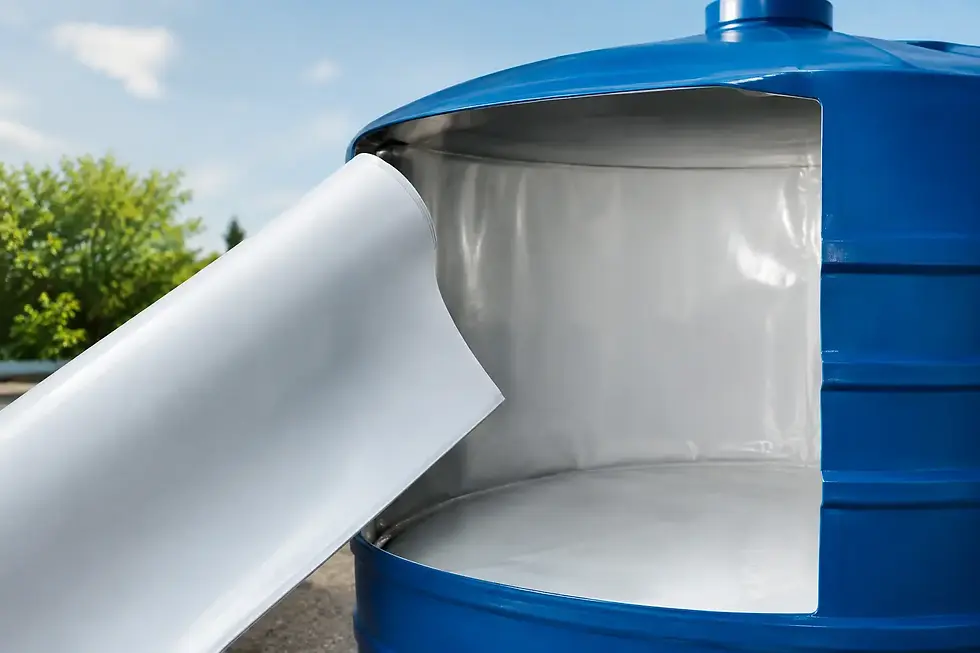
A roof leak may reveal a broader issue with tank condition. If rainwater has entered a steel tank for a prolonged period, internal corrosion and coating failure may already be present. In this situation, an internal flexible polypropylene lining can form part of a comprehensive refurbishment, creating a contained, hygienic barrier within the existing tank structure.
This approach can be particularly effective where the original tank remains structurally serviceable but the internal surfaces are no longer suitable for continued use. It avoids the disruption and cost of replacing the entire vessel in many cases. The roof must still be repaired or renewed first, because a lining should not be expected to compensate for ongoing weather ingress or structural defects.
Keeping the tank operational during repair
Operational planning is central to successful tank roof leak solutions. A potable or process water tank may need temporary isolation, cleaning, disinfection and controlled return to service. For sprinkler storage, any work must be planned around fire protection obligations, with appropriate contingency arrangements agreed before isolation.
The duration of downtime depends on the repair scope. A local hatch seal replacement may be completed quickly, while roof renewal or full internal refurbishment requires more detailed sequencing. In some multi-tank arrangements, work can be phased so that storage capacity remains available. Where only one tank serves the site, temporary storage or a carefully planned shutdown may be required.
Health and safety must also be considered from the outset. Roof work presents working-at-height risks, and internal inspections or repairs may involve confined-space controls. Competent access arrangements, rescue planning and safe handling of materials are not optional additions to the job. They are part of delivering a repair that is safe, auditable and fit for purpose.
When repair is no longer the right answer
There is a point at which repeated patch repairs become false economy. Extensive perforation, structural corrosion, unstable supports, major roof distortion or a tank that no longer meets operational requirements may make replacement the more responsible option. The decision should be based on condition, lifecycle cost, water quality risk and the consequences of failure, not simply the visible size of the leak.
A specialist contractor can compare the cost and disruption of local repair, roof replacement, lining and full tank replacement. Nationwide Water Solutions Ltd provides this type of assessment across commercial and industrial water storage assets, helping operators retain serviceable infrastructure where appropriate while identifying when a replacement installation is the better long-term investment.
Preventing the next roof leak
Tank roofs should be included in planned inspection and maintenance schedules, not examined only after water appears below the lid. Regular checks of panel joints, fixings, hatches, vents, coating condition, insulation and drainage can identify defects before they affect water quality or tank availability.
After severe weather, inspections are especially worthwhile where roofs are exposed, ageing or located beneath trees. Remove debris that holds moisture against the surface, address damaged protective coatings promptly and investigate any signs of internal staining, corrosion or unexpected condensation.
The most dependable repair is the one matched to the tank's actual condition. A careful survey, compatible materials and properly managed installation will do more than stop a leak: they will protect the stored water and give the tank a longer, more predictable working life.


Comments