
Water Tank Byelaw 30 Compliance Explained
Updated: May 6

A tank can look sound from the outside and still fail the basic tests that matter most - hygiene, protection against contamination, and safe access for inspection and maintenance. That is why water tank byelaw 30 compliance remains a live issue across commercial buildings, industrial sites, schools, healthcare premises and multi-occupancy estates. If the stored water is intended for wholesome use, the tank arrangement, condition and fittings all need to support that standard in practice, not just on paper.
For facilities teams, this is rarely about one defect in isolation. A compliant tank is the result of correct construction, suitable materials, effective screening and sealing, sensible access provisions, and a maintenance regime that identifies deterioration before it becomes a water quality problem. Where older tanks are still in service, the gap between historical installation standards and current expectations can be significant.
What water tank byelaw 30 compliance actually means
Byelaw 30 is commonly used as shorthand for the requirements that apply to cold water storage cisterns and related fittings intended to protect wholesome water supplies from contamination, misuse and poor installation practice. In operational terms, water tank byelaw 30 compliance is about whether the stored water is properly protected from ingress, stagnation risks and material failures that could affect quality.
That usually brings attention to the tank lid, vents, overflows, warning pipes, internal condition, insulation, access hatches and the suitability of the tank material itself. It also extends to how the tank is installed and maintained. A tank can be structurally serviceable but still non-compliant because the lid is badly fitted, the screens are missing or damaged, or the internal surfaces have degraded to a point where hygiene control is compromised.
For building operators, the practical implication is straightforward. If a tank stores potable water, it should be designed and maintained so contaminants, insects, debris, vermin, light and heat gain are controlled. If it cannot achieve that standard in its current form, remedial work or replacement becomes a risk management decision rather than a cosmetic one.
The defects that most often prevent compliance
In the field, the same issues appear repeatedly. Older sectional tanks and site-built tanks often have ill-fitting or split lids, unprotected vents, corroded internals, failed coatings, damaged screens and poor insulation. Access covers may be difficult to secure properly, which creates an obvious contamination route. Internal tie bars, supports and fixings can also corrode and shed material into the stored water.
Concrete and steel tanks present their own challenges. Concrete structures may remain structurally viable but have internal surfaces that are no longer suitable without refurbishment or relining. Steel tanks can suffer from coating breakdown, corrosion at joints and roof defects. GRP tanks are not exempt either. Ageing panels, cracked trims, failed seals and damaged lid arrangements can all undermine hygienic performance.
There is also the issue of dead spots and poor turnover. While byelaw compliance is often discussed in terms of fittings and construction, real-world water hygiene depends on how the tank operates. Oversized storage, underused sections and poor flow patterns can contribute to stagnation, sediment build-up and temperature drift. In those cases, a tank may need more than a like-for-like repair.
Why lids, screens and insulation matter so much
These are sometimes treated as minor accessories. They are not. A secure insulated lid helps prevent debris ingress, restricts light, limits heat gain and improves overall hygiene control. Properly screened overflows and vents reduce the chance of insect entry and other contamination. Good insulation supports temperature control, which is particularly relevant where cold water quality must be protected in warmer plant environments.
When any one of these elements fails, the whole system becomes harder to defend from a compliance perspective. That is why tank surveys often identify ancillary upgrades alongside internal refurbishment.
How compliance is assessed on site
A meaningful assessment starts with the tank as an operating asset, not just a box holding water. Inspectors will typically review access, internal cleanliness, evidence of corrosion or degradation, condition of the lid and hatch arrangements, vent and overflow screening, insulation, warning pipe configuration and the general suitability of the tank for its current duty.
Material condition is a major factor. If coatings are blistering, flaking or worn through, or if concrete surfaces are porous and deteriorating, remedial action is usually needed to restore a cleanable, hygienic internal surface. If structural defects are present, the scope becomes wider. At that point the decision is not only whether the tank is compliant today, but whether it can remain compliant after repair.
This is where an engineering-led survey adds value. The right recommendation depends on the tank type, the stored water application, the available shutdown window, access restrictions and the cost difference between refurbishment and replacement. A blanket answer rarely fits every site.
Water tank byelaw 30 compliance and remedial strategy
The most cost-effective route is often not full replacement. Many tanks that fall short of water tank byelaw 30 compliance can be upgraded through targeted remedial works if the underlying structure is still sound. That may include internal lining, epoxy coating, insulated lid replacement, hatch upgrades, new screened overflows and vents, sectional repairs, support repairs or full hygienic refurbishment.
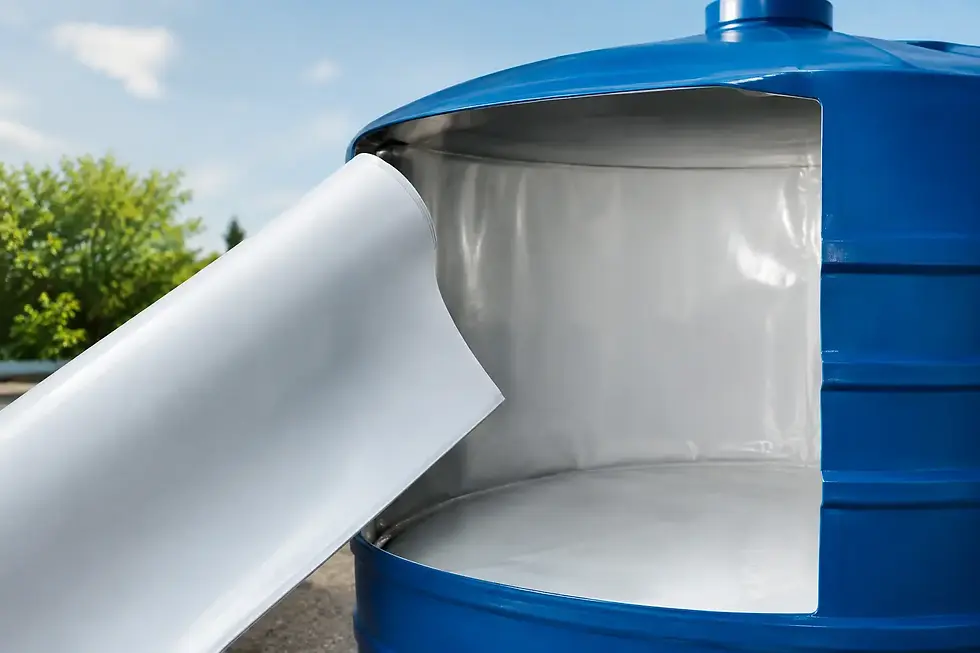
For concrete tanks, a specialist lining system can be particularly effective where the shell remains viable but the internal surface no longer meets hygiene expectations. Flexible polypropylene lining systems offer a clean internal barrier and can extend service life without the disruption and capital cost of demolishing and replacing the whole asset. On steel tanks, the correct coating specification and remedial preparation are critical. The success of the project depends on surface preparation, detailing and using a system suited to potable water duty.
Replacement is the better answer where the tank is structurally compromised, badly configured, inaccessible for safe maintenance, or uneconomic to refurbish. It can also be the right move where the existing layout creates recurrent hygiene or turnover problems that simple repairs will not fix. In those cases, a new GRP or other suitable tank system can resolve both compliance and operational weaknesses in one project.
It depends on the age, material and duty of the tank
There is no single remedial formula. A potable water tank in a commercial plantroom has different constraints from a sprinkler tank, an underground tank or a process water installation. Byelaw-driven hygiene issues are most acute on wholesome water storage, but many of the same physical defects still matter across non-potable systems because they affect durability, inspection access and long-term reliability.
That is why specification should follow the application. Materials, lining systems, coatings, insulation levels and access arrangements all need to suit the actual service conditions.
The operational cost of leaving non-compliance unresolved
The immediate concern is water quality risk, but the wider cost can be just as significant. Tanks with poor lids, failed coatings or contaminated internals tend to demand more reactive maintenance. They can trigger repeated cleaning visits, operational disruption and difficult conversations after failed inspections or audit findings. If contamination is suspected, the knock-on effect on occupants, process continuity and contractor coordination can quickly outweigh the cost of planned remedial work.
There is also a false economy in patch repairs. Temporary fixes to lids, vents or internal surfaces often defer rather than remove the problem. If the tank requires repeated intervention, a structured refurbishment or replacement project is usually the better commercial decision.
For duty holders, the stronger position is to identify the gap early, scope the right remedial route and complete the work before water quality concerns escalate. That approach supports compliance, but it also protects service continuity and extends asset life where the tank is worth saving.
What good looks like after remedial work
A compliant tank should be straightforward to inspect, secure against ingress, internally suitable for hygienic water storage and properly insulated where required. Lids should fit correctly, hatches should provide practical access, screens should be intact and appropriately specified, and internal surfaces should be sound and cleanable. The tank should also make sense as part of the wider water system, with storage volume, turnover and maintenance access aligned to actual site use.
Where upgrades are delivered properly, the result is not only a better inspection outcome. It is a tank that is easier to manage over the long term, with lower risk of recurring hygiene defects and less unplanned intervention. For many commercial and industrial sites, that is the real benefit of compliance work. It turns a vulnerable asset into a dependable one.
Nationwide Water Solutions Ltd works with clients facing exactly these issues, from isolated compliance defects through to full refurbishment and replacement decisions across ageing water storage assets.
If your tank has not been assessed in detail for some time, the right next step is not guesswork or a surface-level repair. It is a proper technical review of the tank condition, fittings and operating duty, followed by a remedial plan that matches the asset rather than forcing the asset to fit a generic fix.


Comments