
How to Upgrade Sprinkler Tanks Properly

A sprinkler tank rarely fails without warning. More often, the signs build slowly - corrosion around fixings, leaks at joints, deteriorating coatings, poor access arrangements, or a capacity that no longer matches the fire protection demand on site. Knowing how to upgrade sprinkler tanks properly means looking beyond a surface repair and assessing whether the tank still meets current operational, structural and compliance requirements.
For commercial buildings, industrial sites and regulated facilities, that decision carries real consequences. A poorly planned upgrade can create avoidable downtime, repeat defects and unnecessary capital spend. A well-planned one can extend asset life significantly, improve system resilience and deliver a clear alternative to full replacement where the structure remains fundamentally serviceable.
How to upgrade sprinkler tanks starts with the right survey
The first step is not ordering a new tank. It is understanding the actual condition of the existing asset. Sprinkler tanks can deteriorate in different ways depending on age, material, environment and maintenance history. A sectional steel tank, for example, may present panel corrosion, failed seals or roof deterioration. A concrete tank may have issues with cracking, water ingress or internal surface degradation. GRP tanks can suffer from damage, distortion or failing ancillary components.
A proper survey should assess structural condition, internal and external deterioration, access and safety provisions, lids and covers, insulation, pipework interfaces and the performance of any existing coatings or linings. Capacity and duty also need reviewing. In some cases, the tank itself is not the main issue. The real problem is that the system has changed over time and the stored volume, valve arrangement or compartmentation no longer aligns with the current fire strategy.
This is where many upgrade projects go wrong. If the scope is set around visible defects only, the resulting works may improve appearance but not reliability. An engineering-led survey gives you the evidence to decide whether refurbishment, relining, component replacement or full tank replacement is the appropriate route.
Decide whether refurbishment or replacement is the better route
Not every ageing sprinkler tank needs to be replaced. Equally, not every tank is worth saving. The right answer depends on structural integrity, remaining service life, access constraints, programme requirements and the cost of bringing the asset up to standard.
Refurbishment is often the strongest option when the primary structure is sound but internal surfaces, joints, roofs, covers or ancillaries have degraded. In these cases, remedial work can restore water tightness, improve durability and reduce disruption compared with a full replacement project. This is particularly valuable on live commercial and industrial sites where space is restricted or where tank removal would create major operational complications.
Replacement tends to make more sense when the tank has extensive structural failure, significant capacity shortfall, obsolete configuration or repeated historical defects that indicate the asset is at the end of its viable life. It can also be the better route where site changes require a different tank material, footprint or insulation standard.
There is no benefit in forcing a refurbishment where the underlying structure is compromised. Equally, replacing a tank that could be economically upgraded is often poor asset management. The commercial advantage comes from diagnosing the condition accurately and selecting the remedy that matches the tank, the site and the fire protection duty.
When lining and coating systems are the smart upgrade
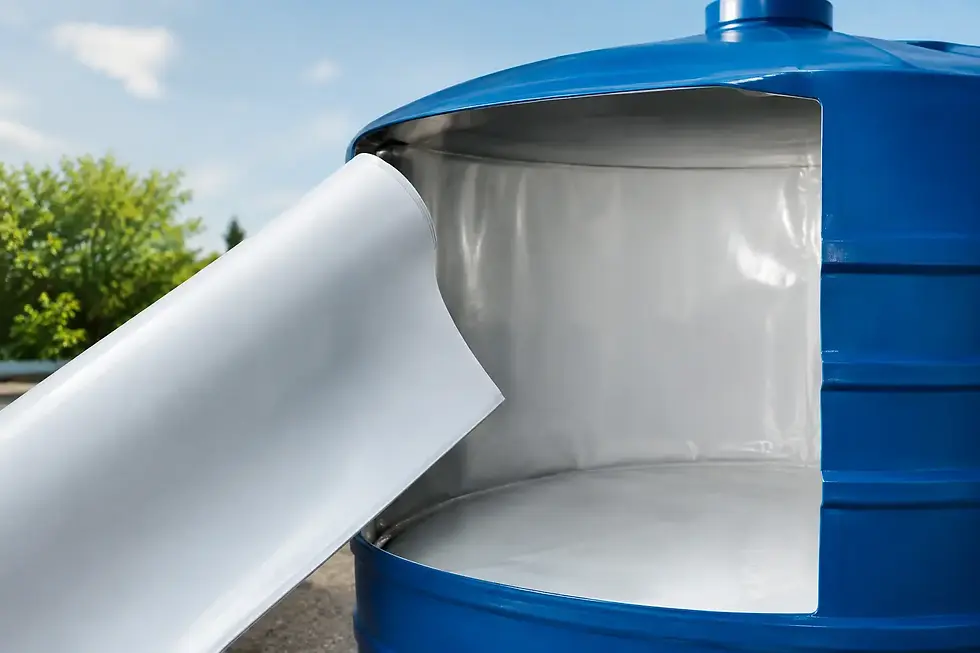
For many sprinkler tank upgrades, internal lining or coating systems provide the best balance of performance, speed and cost control. If corrosion or internal surface deterioration is the primary issue, a specialist lining system can create a durable barrier and extend tank life without the disruption of full asset replacement.
The specification matters. Not all lining materials perform equally in demanding service environments, and installation quality is just as important as material quality. Flexible polypropylene lining systems, for example, can offer excellent chemical resistance, durability and rapid installation where the tank shell remains serviceable. In other cases, epoxy resin coating systems may be suitable, particularly where substrate preparation and curing conditions can be tightly controlled.
The wrong system can lead to adhesion failure, localised defects or shortened life expectancy. The right system, installed with proper surface preparation and detailing, can convert a deteriorating tank into a reliable long-term asset. This is why upgrade decisions should be based on tank construction, service conditions and practical installation constraints rather than on a generic product preference.
Upgrade the parts of the tank that usually get overlooked
A sprinkler tank upgrade is not only about the shell. Ancillary components often determine whether the finished system performs properly in service. Roofs and lids, for example, are frequently neglected until water ingress, contamination or insulation problems become obvious. Replacing damaged covers or fitting insulated lids can improve asset protection and reduce future deterioration.
Access is another common weakness. Older tanks may have ladders, hatches or working platforms that fall short of modern safety expectations. If inspection and maintenance access is poor, the tank becomes harder to manage safely and defects are more likely to be missed. Upgrading access arrangements during remedial works is usually far more efficient than treating it as a separate project later.
Valve sets, overflows, vents, level indicators and pipe connections should also be reviewed. A tank may be structurally recoverable but still operationally weak because the associated components are outdated, corroded or awkward to maintain. An effective upgrade improves the whole storage asset, not just the visible surfaces.
Compliance should shape the scope, not follow it
For sprinkler tanks, compliance is not an afterthought. It should guide the scope from the start. The required works will depend on the building type, system design, insurer expectations and any relevant standards or client specifications. That means the upgrade should be planned around demonstrated compliance outcomes, not simply around what appears cheapest in the short term.
This is particularly important where tanks support critical fire protection systems. If a refurbishment is carried out without addressing underlying compliance issues, the site may spend money without materially reducing risk. Common examples include inadequate access for inspection, insufficient capacity, poor compartment condition or incomplete remedial treatment of degraded areas.
A specialist contractor should be able to identify where defects are cosmetic, where they are structural, and where they create a compliance risk. That distinction matters because it affects programme, method, documentation and ultimately the long-term reliability of the sprinkler water supply.
Plan works around operational risk and site constraints
Sprinkler tank projects are rarely carried out in ideal conditions. Access may be difficult, the tank may be located on a live roof or in a confined plant area, and the building may need fire protection continuity throughout the works. That is why understanding how to upgrade sprinkler tanks also means understanding phasing, temporary arrangements and installation logistics.
On occupied or high-risk sites, speed of installation can be critical. This is one reason refurbishment and lining solutions are often attractive. They can reduce strip-out, waste removal and heavy replacement works while still delivering a meaningful service life extension. However, speed should never come at the expense of preparation. Surface preparation, substrate condition and detailing are often what determine whether a lining or coating system performs for years or fails early.
Material selection should also account for the environment. External tanks exposed to temperature fluctuation and weathering may need different protective measures from internal tanks in plant rooms. Sites with difficult access may benefit from systems that can be manufactured or adapted to suit restricted installation conditions. In-house manufacturing capability can make a material difference here because it allows more control over dimensions, detailing and programme.
How to upgrade sprinkler tanks for longer asset life
The most successful upgrades are the ones that treat the tank as a long-term infrastructure asset rather than a short-term maintenance problem. That means specifying works that are proportionate to the tank condition, but durable enough to avoid repeat intervention after only a few years.
In practice, that often involves combining several measures: internal lining or coating, replacement of defective covers, improved insulation, upgraded access equipment, joint repairs, local structural remedials and a review of associated pipework and fittings. A piecemeal approach may cost less on day one, but it can be more expensive over the life of the asset if defects simply reappear in stages.
It also helps to work with a contractor that understands both remedial and replacement options. If a supplier only offers one route, the recommendation can become predictable. A genuine specialist should be able to assess the tank objectively and advise whether refurbishment is commercially sensible or whether replacement is the better engineering decision. That practical approach is central to how Nationwide Water Solutions Ltd approaches complex sprinkler tank projects across commercial and industrial sites.
A sprinkler tank upgrade should leave you with more than a repaired vessel. It should give you confidence that the stored water supply is protected, the asset is easier to maintain, and the next major intervention is further away than it was before. If the proposed works do not clearly improve reliability, compliance and service life, the scope probably needs another look.


Comments