
Choosing a Commercial Tank Relining Contractor
- m12674
- May 28
- 6 min read
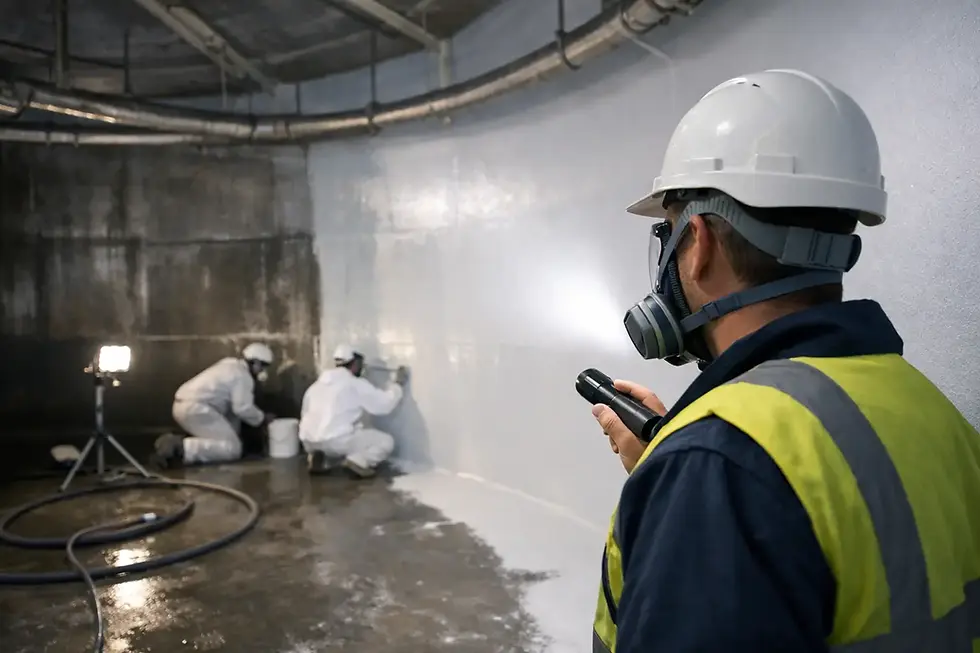
A tank rarely fails all at once. More often, it starts with coating breakdown, localised corrosion, leaking joints, degraded roofs, hygiene concerns, or a survey that flags compliance issues you can no longer defer. At that point, choosing the right commercial tank relining contractor becomes less a procurement exercise and more a risk decision. The quality of the diagnosis, the lining system and the installation method will directly affect asset life, water quality, downtime and cost.
For commercial and industrial sites, relining is often the most practical route when the existing tank shell remains structurally serviceable. Full replacement has its place, particularly where tanks are beyond economic repair or access constraints make refurbishment unrealistic. But many steel, concrete and sectional tanks can be returned to reliable service with the correct remedial approach. The key is appointing a contractor that understands where relining works well, where it does not, and how to deliver a compliant result in live operating environments.
What a commercial tank relining contractor should actually do
A competent contractor does more than install a new internal surface. The job starts with technical assessment. That means identifying the tank material, stored medium, service conditions, failure points, access restrictions and the real cause of deterioration. Corrosion inside a potable water tank is a different problem from chemical attack in a process tank or water ingress affecting an underground structure. Treating them as if they were the same usually leads to short service life and repeat remedial spend.
A proper scope should cover substrate condition, joint integrity, roof and hatch condition, overflow and vent arrangements, insulation, contamination risks and any defects affecting regulatory compliance. In many cases, relining is only one part of the solution. The tank may also need structural repairs, sectional joint treatment, roof refurbishment, access improvements, screened vents, insulated covers or pipework modifications.
This is where engineering judgement matters. A contractor focused only on applying a coating may miss wider asset issues. A specialist water storage contractor should be able to advise on the full remedial picture and recommend replacement only where the tank no longer justifies refurbishment.
Why material choice matters in commercial tank relining
Not all lining systems perform the same way, and not all are suitable for every tank. This is one of the biggest distinctions between general contractors and true specialists.
Traditional epoxy resin coating systems can be highly effective where the substrate is sound, preparation standards can be controlled and the operating environment suits the product. They can provide excellent protection and hygiene performance, particularly in commercial water storage applications. However, success depends heavily on surface preparation, environmental control during application and long-term adhesion to the existing substrate.
Flexible polypropylene lining systems offer a different set of advantages. In the right application, they can isolate stored water from the failing substrate, accommodate minor imperfections and deliver a rapid refurbishment route without the cost and disruption of full tank replacement. For ageing tanks where surface degradation is advanced but the overall structure remains usable, a flexible lining system may provide a more practical and durable answer than repeated coating repairs.
There is no universal best option. Potable water, sprinkler storage, process water and aggressive liquids all place different demands on the lining. The right contractor should explain that trade-off clearly rather than forcing every project towards a single product.
Signs you need a specialist rather than a general contractor
If the tank serves potable water systems, fire suppression, regulated process operations or critical building services, specialist experience is not optional. The margin for error is too small.
One warning sign is a proposal built around price before condition. If a contractor quotes quickly without a detailed survey, they are guessing. Another is vague language around compliance, approvals or chemical resistance. A relining system must suit both the stored medium and the operating environment, and the contractor should be able to show why.
Difficult access is another dividing line. Many commercial tanks are located in plantrooms, rooftops, basements, compounds or restricted service areas where bringing in replacement sections is disruptive or impossible. A specialist contractor will already be thinking about access routes, confined space working, sequencing, hygiene controls and how to complete the project with minimum interruption to site operations.
Assessing a commercial tank relining contractor
The first question is whether the contractor understands tanks as assets rather than isolated defects. That means experience across steel tanks, concrete tanks, sectional tanks, insulated enclosures, underground structures and specialist storage applications. A business that only applies coatings may not be equipped to manage associated repairs or advise on replacement when required.
The second question is capability. In-house manufacturing and product development are significant advantages because they give better control over system quality, lead times and technical support. If a contractor relies entirely on third-party products without deeper system knowledge, the solution can become generic very quickly.
The third question is installation methodology. You need to know how the tank will be prepared, how defects will be addressed before lining, how hygiene will be protected, what curing or commissioning requirements apply, and how the final installation will be checked. Reliable contractors are usually very clear on process because they have delivered it repeatedly.
It is also worth looking at how they handle upgrades beyond the liner itself. Many tank failures are linked to neglected lids, poor insulation, defective screens or damaged internal surfaces around access points and connections. A contractor that can resolve the whole asset in one programme usually delivers a better long-term outcome than a narrowly scoped repair team.
Compliance, water quality and operational risk
For facilities managers and responsible persons, the concern is not just whether a tank can be repaired. It is whether it can be returned to service in a condition that supports compliance and reduces future risk.
In potable water applications, internal surfaces, access arrangements and tank hygiene all matter. In sprinkler storage, serviceability and reliability under emergency demand are critical. In process environments, resistance to the stored liquid and operating conditions takes priority. A contractor should be able to align the remedial specification with the actual duty of the tank rather than applying a one-size-fits-all refurbishment model.
Survey-led recommendations are particularly valuable here. They create a documented basis for decision-making and help distinguish cosmetic deterioration from issues that affect safety, hygiene or performance. For many clients, that clarity is just as important as the installation itself because it supports budgeting, compliance planning and asset management.
When relining is the better choice than replacement
Relining is usually attractive for one simple reason: the tank structure often has more life in it than the failed internal surface suggests. If the shell is fundamentally sound, relining can extend service life substantially while avoiding the cost, disruption and logistical complexity of replacement.
That is especially true on sites where access is poor, shutdown windows are limited or associated building work would make replacement disproportionately expensive. Removing and replacing a large commercial tank may involve craneage, builder's work, plantroom modifications, service interruptions and lengthy lead times. A well-planned relining project can reduce much of that disruption.
That said, relining is not always the cheaper option in the long term if the underlying structure is near the end of its life. An honest contractor will say so. The right recommendation depends on structural condition, service requirements, access, compliance issues and future asset strategy.
Nationwide Water Solutions Ltd works in exactly this space - helping clients determine whether a tank should be repaired, relined, upgraded or replaced, based on technical condition rather than assumption.
The value of speed, but not at the expense of specification
Fast installation matters, particularly in commercial buildings, healthcare environments, industrial facilities and sites with limited reserve capacity. But speed only has value if the specification is correct.
A contractor promising the shortest programme without explaining preparation standards, defect treatment or material suitability may simply be stripping out critical steps. Conversely, a specialist with proven systems and experienced installation teams can often deliver both pace and quality because the work has been engineered in advance. That is a very different proposition from rushing the job.
The best projects tend to be the ones where the contractor is direct about constraints. If drying times, hygiene controls, access issues or staged isolation will affect the programme, you should hear that at the outset. Clear planning prevents operational surprises later.
What good contractor advice sounds like
Good advice is specific. It explains why the tank has failed, what remedial routes are technically viable, what preparation is required and what service life you should realistically expect. It also identifies what sits outside relining itself, such as covers, insulation, valve chambers, access steelwork or regulatory deficiencies.
It should not oversimplify. Some tanks are ideal candidates for flexible lining systems. Others are better suited to epoxy coating. Some need sectional refurbishment before either system is installed. A few should be replaced altogether. The most dependable commercial tank relining contractor is usually the one prepared to say, "it depends on the tank condition", and then prove it with a proper survey.
If your tank is showing signs of deterioration, delay rarely improves the economics. Early intervention usually preserves more options, reduces risk to service continuity and allows remedial work to be planned rather than forced by failure. The right contractor will help you make that decision with evidence, not guesswork.


Comments